

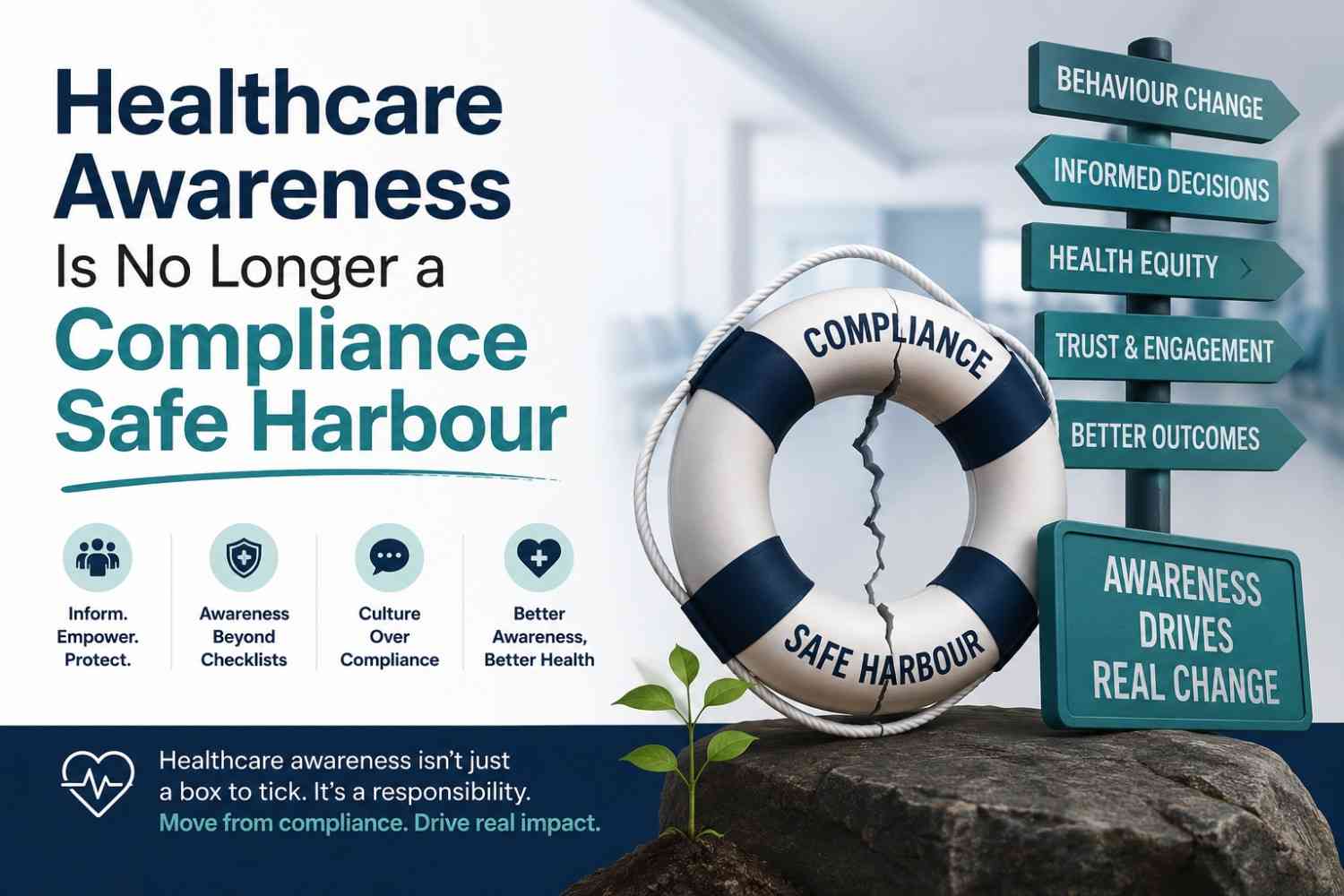
Why the old “awareness
versus advertising” distinction is weakening
Healthcare communication has long
relied on a reassuring distinction: product advertising is regulated, while
disease education is informational. That distinction still matters, but it is
no longer enough. Regulators and stakeholders can assess the total context—who
funded the campaign, when it appeared, how the condition was framed, which
doctors or influencers participated, whether a corporate logo was visible and
whether the campaign predictably increased demand for a prescription medicine.
Two recent developments illustrate
the direction of travel. CDSCO invited stakeholder comments on the use of
brand-name extensions by pharmaceutical companies, reflecting concerns that a
common parent brand across medicines with different active ingredients can
create confusion and patient-safety risk. Separately, Eli Lilly paused its
India obesity-awareness campaign after regulatory scrutiny over whether a
non-branded, physician-led initiative could indirectly promote prescription
medicines. The campaign did not name Mounjaro, but its timing, sponsorship and
market context became relevant to the regulatory assessment.
The campaign title
is not the compliance test
Words such as “awareness”,
“education”, “screening” and “patient empowerment” describe intent; they do not
settle regulatory interpretation. A campaign launched close to a product
introduction, carrying the manufacturer’s identity, amplified by celebrities
and distributed across billboards, social media and residential communities may
generate brand or category demand even without naming a medicine.
Conversely, a well-governed
patient-education initiative is easier to defend when it presents balanced
information, identifies sponsorship transparently, uses current clinical
evidence, avoids superiority language, explains when professional advice is
required and does not create urgency around a particular prescription
treatment. The question is not only “Did we name the brand?” It is “What
commercial inference would a reasonable audience draw from the entire
campaign?”
Why pharmaceutical
brand architecture can become a patient-safety issue
Brand extensions are attractive
because they transfer familiarity and trust. In healthcare, that same transfer
can become risky when an umbrella or root name is used across unrelated
formulations or active ingredients. Patients, caregivers and even busy
dispensing environments may rely on partial recall, colour, pronunciation or
verbal recommendation. Similar names can therefore create confusion about
indication, strength or therapeutic purpose.
The communication implication is
significant. Naming is not a downstream creative matter. PR teams working on
product milestones, patient stories, doctor education or access programmes need
to understand the active ingredient, indication, prescription status,
contraindication context and naming rationale before building a narrative.
Corporate brand equity should strengthen medicine-level clarity, not blur it.
Separate four communication lanes before they merge in public
|
STEP |
CONTROL |
WHAT IT REQUIRES |
|
1 |
Patient education |
Balanced
disease information, symptoms, risk factors, prevention, screening and when
to consult a qualified professional. No disguised demand generation. |
|
2 |
Corporate reputation |
Research
investment, manufacturing quality, access initiatives, governance, partnerships
and public-health contribution—without implying unsupported product benefit. |
|
3 |
Doctor-led information |
Clinically
substantiated explanation with appropriate credentials, disclosures, evidence
references and clear separation from paid endorsement or product
solicitation. |
|
4 |
Product communication |
Material
reviewed against applicable prescription-drug, advertising, labelling, claims
and channel requirements, with defined audiences and approval records. |
The Carmine
Healthcare Communications Compliance Gate
1. Intent and
independence
Document
the public-health or corporate objective that exists independently of product
sales. Ask whether the campaign would still be justified if the company had no
relevant medicine launching or growing in the market.
2. Product linkage
and timing
Map
the proximity to product approval, launch, price change, expanded indication,
distribution push or competitor activity. Review whether the campaign language,
visual identity or call to action creates predictable recall for a specific
product or class.
3. Claims and
medical substantiation
Every
statistic, comparison, outcome statement and risk claim should have a current,
appropriate source. Distinguish prevalence from diagnosis, association from
causation and patient experience from general clinical evidence. Avoid language
that overstates certainty or trivialises risk.
4. Spokesperson and
influencer governance
Assess
credentials, conflicts, sponsorship disclosure, script control and platform
behaviour. A clinician’s presence does not automatically neutralise a
commercial inference. Celebrity or lifestyle influence can increase scrutiny
because reach and emotional persuasion may outweigh the educational framing.
5. Naming and
patient-safety language
Review
brand roots, look-alike or sound-alike risk, indication clarity, dosage
references and the possibility of self-medication. Patient-facing content
should state when professional diagnosis is necessary and should not encourage
prescription switching, unsupervised use or false reassurance.
6. Channel,
audience and amplification
A
scientific webinar for healthcare professionals, a patient leaflet, an
Instagram reel and a mass outdoor campaign do not carry the same risk. Review
targeting, comments, retargeting, creator reposts, paid amplification and
whether the audience can distinguish education from promotion.
7. Approval
evidence and post-release monitoring
Maintain
a claim sheet, source pack, approved scripts, versions, disclosure records and
sign-offs from medical, legal and regulatory teams. After release, monitor
audience interpretation, misinformation, off-script influencer content and
media coverage that may reframe the campaign.
What hospitals and
health-tech companies should learn from pharma scrutiny
The issue is not limited to drug
manufacturers. Hospitals can create risk through “awareness packages” that
overstate urgency, imply guaranteed outcomes or convert education into
aggressive lead generation. Diagnostic and health-tech brands can blur the line
through risk scores, AI claims, before-and-after narratives or influencer
demonstrations that appear clinical without adequate validation.
A safer approach is to define the
communication objective first and commercial conversion second. Patient
education should help the audience make a better health decision even if the
decision does not result in an immediate sale. That principle strengthens both
compliance and trust.
The reputation cost
of getting the boundary wrong
Regulatory action is only one
consequence. A disputed campaign can trigger criticism from doctors, patient
groups and journalists; undermine relationships with regulators; create
internal tension between marketing and medical teams; and contaminate future
corporate-reputation work. Even when a campaign is technically defensible, a
perception that the company medicalised ordinary life or used fear to stimulate
demand can damage trust.
The best healthcare communication
is not cautious to the point of becoming unhelpful. It is precise about
purpose, transparent about sponsorship, disciplined about evidence and designed
around patient comprehension rather than promotional ambiguity.