

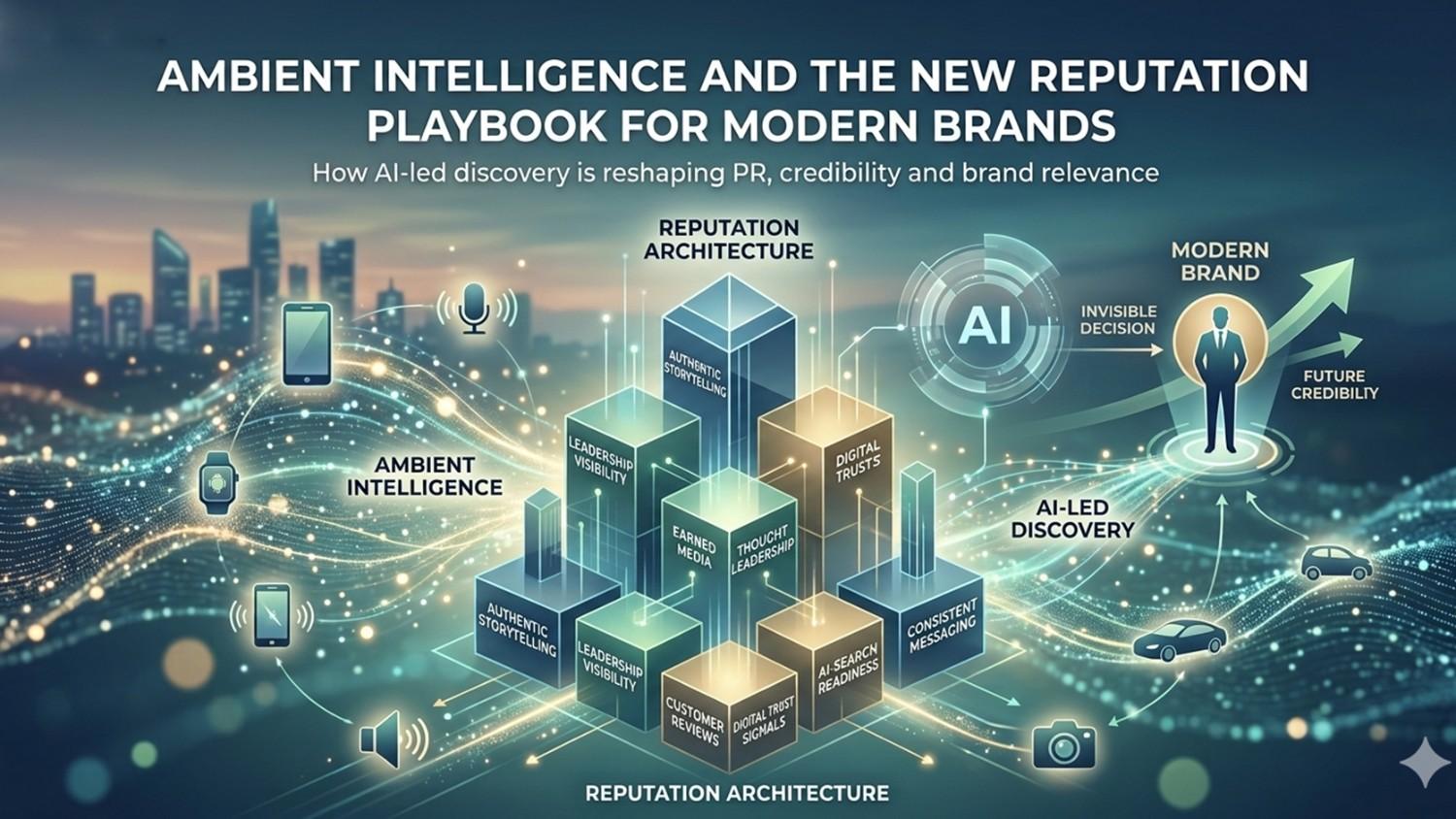
How AI-led discovery is reshaping PR,
credibility and brand relevance
AI is no longer sitting inside a search bar
waiting for a question. It is slowly becoming part of everyday life — in
phones, watches, cars, home devices, cameras, voice assistants, search results
and digital recommendations. This shift is called ambient intelligence:
technology that quietly understands context, anticipates needs and influences
decisions.
For brands, this is a wake-up call.
Reputation will no longer be shaped only by what companies say about
themselves. It will be shaped by what intelligent systems, online communities,
media stories, customer reviews and digital signals say about them.
This
changes the role of public relations completely.
Earlier, PR was largely about media coverage, press releases, interviews and crisis response. Today, it is about building trust signals across every place where a customer, investor, employee or AI-powered platform may evaluate a brand. A hospital, for example, may have excellent doctors and infrastructure, but if online reviews speak only about high bills, delayed responses or poor patient experience, that becomes the dominant reputation signal. A real estate developer may have premium projects, but if search results highlight delayed possession or unresolved complaints, the brand story weakens before the sales team even enters the conversation.
This is why modern PR professionals must think beyond
visibility. They must build reputation architecture.
Ambient intelligence will make
decision-making faster and more invisible. A customer may ask an AI assistant,
“Which financial advisory firm is credible?” or “Which builder should I trust
in Mumbai?” The answer will not come only from advertising. It may be
influenced by media mentions, leadership articles, Google reviews, social
conversations, website clarity, employee feedback, podcasts, industry awards
and even unresolved negative chatter.
Modern PR must move from visibility to reputation architecture.
What Companies Need to Watch Out For
• Credibility will
beat noise. Brands that chase only viral content may get
attention, but brands that consistently offer expert views, transparent
communication and proof of performance will build trust.
• Reputation will
become searchable and conversational. People will not
only search for company names; they will ask comparative questions: Is this
hospital expensive? Is this developer reliable? Is this company ethical? PR
must prepare brands for these questions.
• Silence can
become a risk. If a company does not actively tell
its story, others will define it — customers, competitors, employees,
influencers or anonymous platforms.
• Leadership
visibility will matter. Founders, CXOs and domain experts
must become credible voices on industry trends, customer concerns, innovation,
ethics and future readiness.
• AI adoption must be communicated responsibly. Companies using AI in healthcare, finance, real estate or customer service must explain how they protect privacy, ensure accuracy and retain human accountability.
What Cutting-Edge PR Should Look Like Now
Brands need an integrated PR strategy that
combines earned media, thought leadership, digital reputation management,
review building, social listening, content marketing, podcasts, LinkedIn
influence, crisis preparedness and AI-search readiness. The goal should be
simple: make the brand trusted, discoverable and relevant before the customer
asks the question.
Modern PR must also create content that
solves real doubts. A hospital should explain treatment costs and patient
safety. A real estate company should communicate construction progress and
delivery discipline. A financial firm should simplify market risks. An
infrastructure company should showcase safety, public impact and community
engagement.
The future belongs to brands that are not
only visible but verifiable. Ambient intelligence will make technology smarter,
but it will also make reputation more exposed. Companies that invest in
authentic storytelling, transparent communication and consistent digital
signals will stay ahead. In the AI-first world, PR is no longer about managing
headlines. It is about shaping trust before decisions are made.