

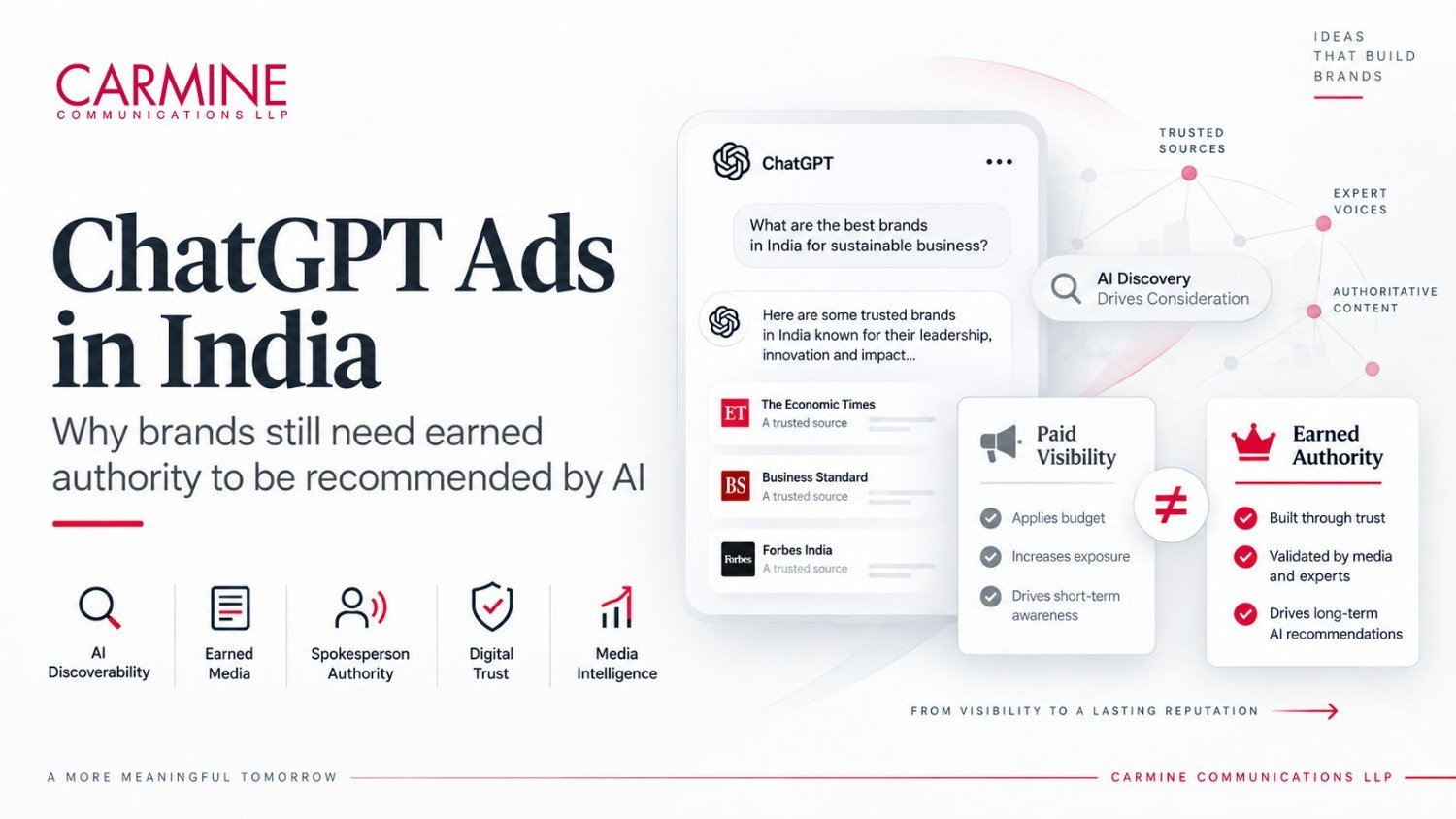
The next digital reputation question is not simply: can we advertise there?
Conversational AI is becoming an important information
environment for brands. As advertising opportunities begin to appear around AI
products, many organisations will naturally ask whether paid visibility can
help them become more prominent when users ask an AI assistant for
recommendations.
The answer requires an important distinction: paid presence
around an AI experience is not the same as being organically surfaced, cited or
recommended inside the answer itself.
For modern communications teams, that distinction matters
because the reputation battle is moving from search rankings alone to a broader
question: when a person asks an AI system about our company, sector, leadership
or services, what does the system understand about us, which sources does it
trust, and how accurately are we represented?
1. Paid AI visibility and earned AI authority are different
Advertising can create additional reach, but it does not
automatically make a company an authoritative source inside an AI-generated
response. Organic AI visibility depends on the quality and consistency of the
information available about the organisation across credible public sources.
This means brands should resist the temptation to treat
conversational AI as simply another paid-media channel. The larger strategic
opportunity is to build a body of trusted evidence that helps AI systems
understand what the organisation does, what its leaders know, and why the brand
is relevant.
2. Earned media is becoming part of machine-readable reputation
A strong media story has always influenced people.
Increasingly, it can also influence machines. Authoritative interviews, sector
commentary, research-led stories, credible third-party mentions and
well-structured corporate information can become part of the source ecosystem
that AI systems use to construct answers.
For PR leaders, this changes the value of earned media. The
objective is no longer only to secure coverage; it is to create reliable,
discoverable and verifiable information that continues to work after the
article is published.
3. Spokesperson reputation now contributes to AI discoverability
Executives are increasingly searchable as bodies of
expertise. Interviews, authored articles, public statements, conference remarks
and consistent commentary around defined themes help establish what a leader is
known for.
Inconsistent, promotional or thin spokesperson visibility
does little to build authority. A more effective approach is to give each
senior leader a clear reputation territory supported by evidence, useful
insight and credible third-party exposure.
4. Verification is becoming central to digital reputation
Deepfakes, impersonation, fraudulent advertisements and
manipulated content make official identity harder to distinguish from false
representations. For sectors such as healthcare, real estate, education and
financial services, this can quickly become a trust and safety issue.
Brands therefore need a clear official information layer:
verified profiles, current leadership information, accurate regulatory details,
consistent corporate descriptions, updated contact points and strong digital
monitoring. When false information appears, the organisation must be able to
prove quickly what is genuine.
5. Media intelligence must now measure what AI says
Traditional media monitoring explains what journalists
published. Modern reputation intelligence should also examine how AI systems
describe the company, which competitors they surface, which sources they cite,
whether executives are associated with the right expertise, and whether
outdated or inaccurate information persists.
This creates a new measurement discipline at the
intersection of PR, digital, search and reputation. The question is not whether
a brand 'ranks' in AI. The more useful question is whether it is accurately
represented, credibly sourced and appropriately recommended for the queries
that matter to its business.
What should organisations do now?
- Identify the 20-30 questions that customers,
journalists, investors, partners and prospects are most likely to ask an AI
assistant about the organisation or its category.
- Test those questions across major AI platforms and record brand presence, accuracy, competitors, sources cited and missing information.
- Strengthen third-party authority through relevant earned media, specialist commentary, original research, case studies and credible executive thought leadership.
- Make official corporate information easy to
verify across the website, leadership profiles, regulatory disclosures, social
channels and high-authority directories.
- Monitor impersonation, deepfakes, fraudulent advertisements and factual errors as part of reputation intelligence rather than treating them as isolated digital issues.
The Carmine perspective: build authority that cannot simply be bought
At Carmine Communications, we see AI discoverability as an
extension of reputation, not a replacement for PR and not a new technical
gimmick.
The brands most likely to perform well in an AI-mediated
information environment will be those with strong earned authority, credible
spokespersons, consistent digital information, relevant sector expertise and an
active system for monitoring how they are represented.
That requires an integrated model combining strategic PR,
crisis and reputation advisory, spokesperson positioning, digital PR, media
intelligence and AI discoverability.
In a fragmented media age, the objective is not merely to be
visible. It is to be trusted, verifiable and worth recommending.
FAQ:
Can brands pay to be recommended by AI assistants?
Paid advertising can create visibility around an AI
experience, but it is different from organic inclusion or recommendation inside
an AI-generated answer. Organic representation depends on the information and
sources the system uses.
What is AI discoverability?
AI discoverability is the ability of a brand, executive or
organisation to be accurately surfaced and described in generative AI answers
for commercially and reputationally relevant queries.
How can PR improve AI discoverability?
PR can strengthen the public evidence surrounding a brand
through credible earned media, expert commentary, original research,
authoritative corporate information and consistent spokesperson visibility.
Why is earned media important in the AI era?
Earned media provides independent third-party validation.
High-quality journalism and specialist coverage can become part of the
information ecosystem that search and AI systems use when assessing a company
or executive.
Is AI SEO replacing traditional SEO?
No. Technical SEO, crawlability, useful content and conventional search visibility remain foundational. AI discoverability adds another requirement: ensuring the organisation is accurately represented inside generative answers as well as search results.